
Virginia Traffic Ticket Records
Virginia traffic ticket records are public documents kept by the court in the jurisdiction where the citation was issued. Each county and independent city in the Commonwealth maintains its own General District Court, and those courts hold the case files for every traffic citation processed in their area. You can search these records by name or case number, pay fines online for prepayable violations, or visit the court clerk in person to get copies. The Virginia DMV also keeps a separate driver record that reflects all traffic convictions. This site helps you find the right court or agency for any Virginia traffic ticket record.
Virginia Traffic Ticket Records Overview
How Virginia Traffic Ticket Records Work
Traffic citations in Virginia move through two separate systems. The court system processes the case and decides the outcome. The DMV records the conviction and adjusts the driver's point balance. Both systems keep their own data, and both are important if you need to look up a traffic ticket record.
When an officer issues a citation, the case goes to the General District Court in the jurisdiction where the stop happened. District courts handle traffic infractions and misdemeanor traffic crimes. The court clerk keeps a record of every case, including the charge, any court dates, the final disposition, and any fines imposed. These records are public. Anyone can ask to see them during business hours at the courthouse. Many jurisdictions also make basic case data available online through the Virginia Judicial System website.
After a case is resolved, the court sends the conviction data to the Virginia DMV. The DMV updates the driver record, adds demerit points if the conviction calls for them, and flags the record if the driver has accumulated too many points. DMV driver records are separate from court case records. You access driver records through the DMV, not through the courts.
The Commonwealth of Virginia also coordinates with other states. Out-of-state violations may be reported to Virginia DMV and assessed points against a Virginia driver's record. Virginia participates in the Interstate Driver License Compact, which means a conviction in another state can show up here too.
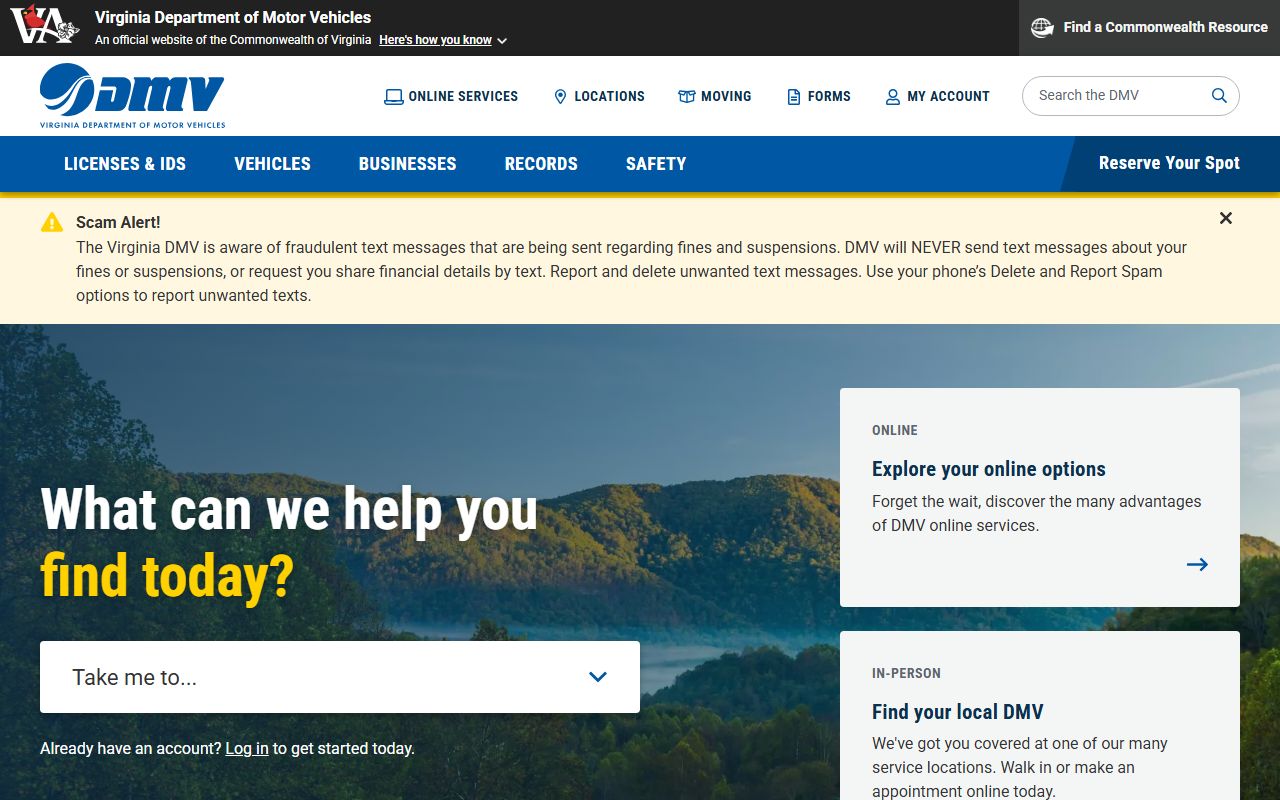
The Virginia DMV serves as the central repository for driver records. You can check license status, request a copy of your driving record, and find DMV service center locations through their site.
Virginia Courts and Traffic Cases
Each Virginia county and independent city has a General District Court. That court handles all local traffic matters. Circuit courts hear appeals and more serious cases. If you received a traffic citation anywhere in Virginia, the General District Court for that area is where your case was processed.
The Virginia Judicial System website provides online access to case information for many jurisdictions. You can search by name or case number to find basic details about a traffic case. The site shows charges, court dates, and dispositions. It does not always include the full case file, but it is a good starting point. For certified copies or full records, you need to contact the court clerk directly.
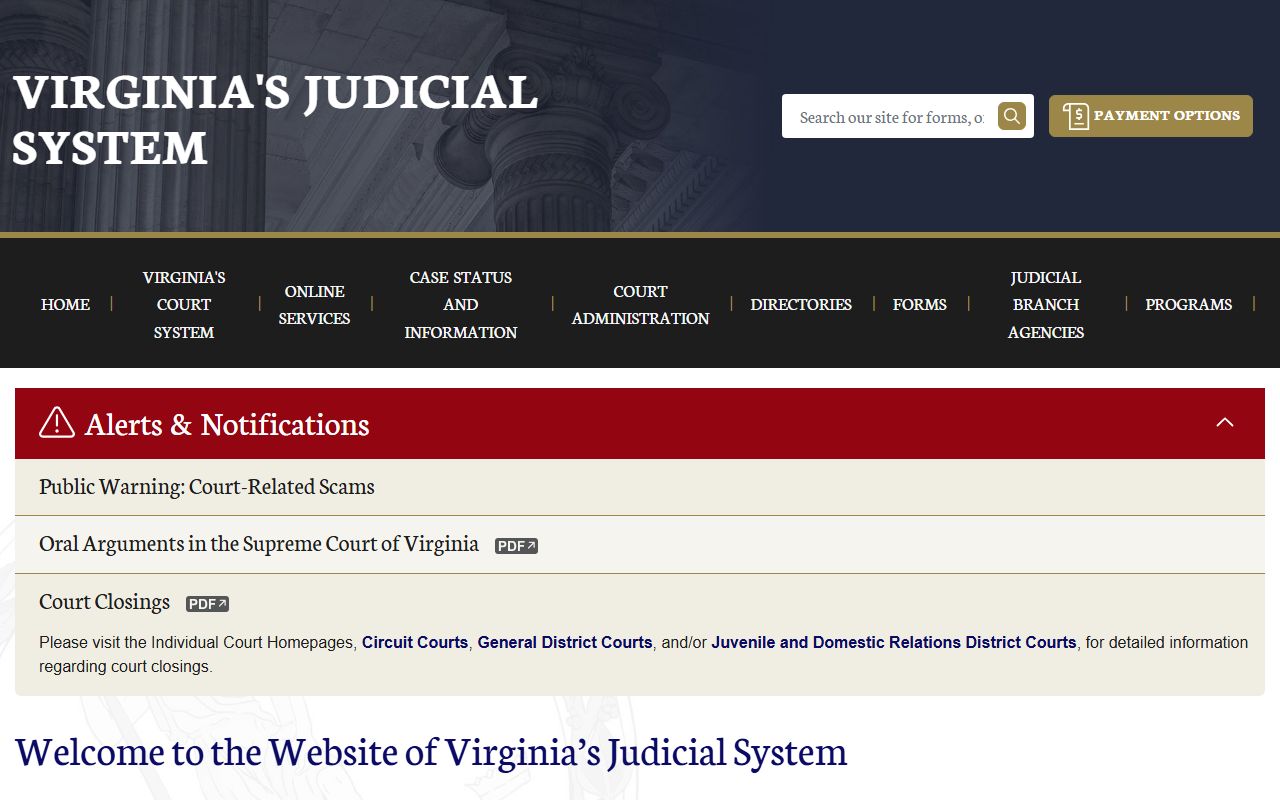
The Virginia Judicial System site at vacourts.gov provides court case information, contact details for each court, and online payment options for prepayable traffic violations.
Courts in Virginia categorize traffic offenses as either infractions or criminal violations. Most speeding tickets and minor moving violations are infractions. They carry fines and demerit points but are not criminal charges. Reckless driving and DUI are criminal offenses. They go on your criminal record as well as your driving record. Court records for both types of cases are generally public.
Note: Prepayable traffic violations can be paid online or by mail without a court appearance. Check the citation itself for instructions. Some violations are not prepayable and require you to appear before a judge.
Virginia Traffic Laws and the Motor Vehicle Code
All traffic laws in Virginia are found in Title 46.2 of the Virginia Code, which covers motor vehicles. This title includes driver licensing requirements, vehicle registration rules, and all traffic regulations. It is the core legal framework for every traffic citation issued in the state.
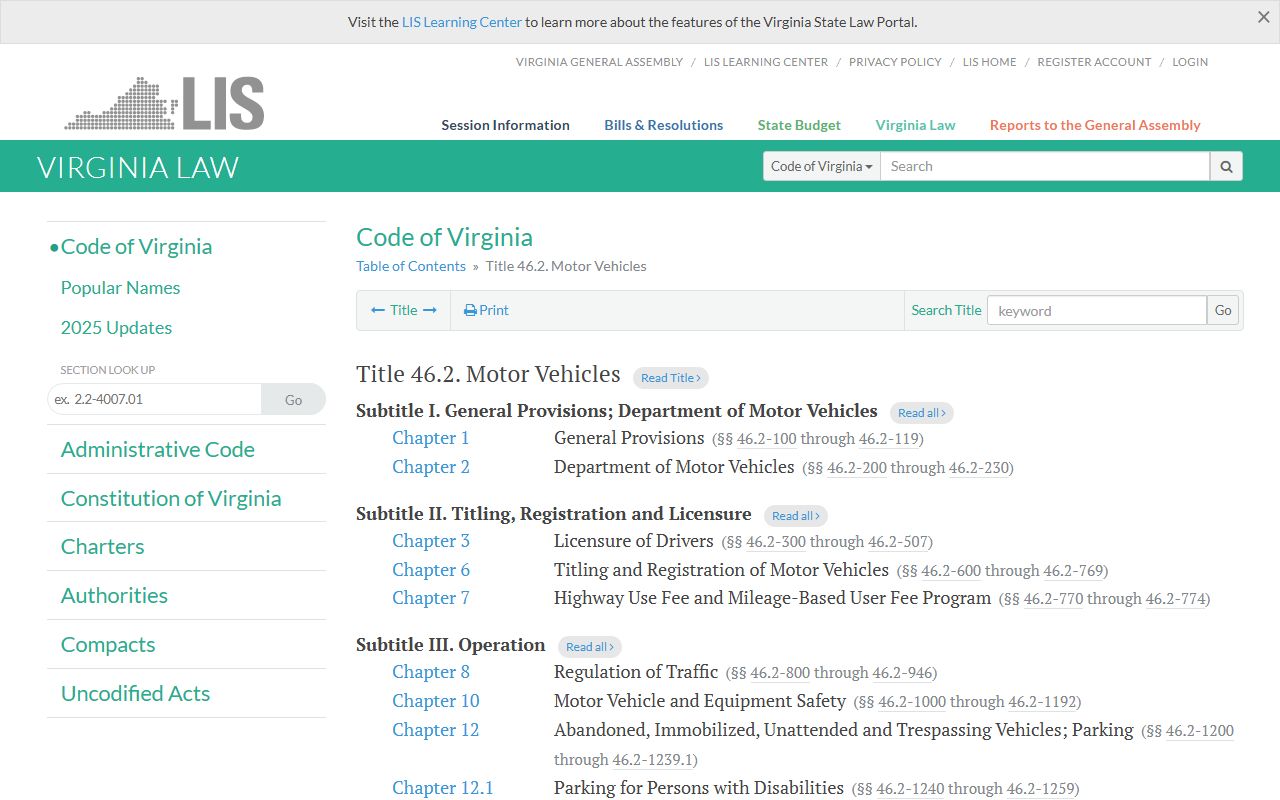
Virginia Code Title 46.2 covers everything from licensing to traffic control to penalties. The full text is available free online through the Virginia General Assembly website.
Chapter 8 of Title 46.2 covers regulation of traffic specifically. It sets out right-of-way rules, speed limits, passing laws, and the rules for traffic signals. Article 7 of Chapter 8 addresses reckless driving. Under Virginia Code § 46.2-852, any driving that endangers life, limb, or property can qualify as reckless driving. That is a broad standard and officers use it often.
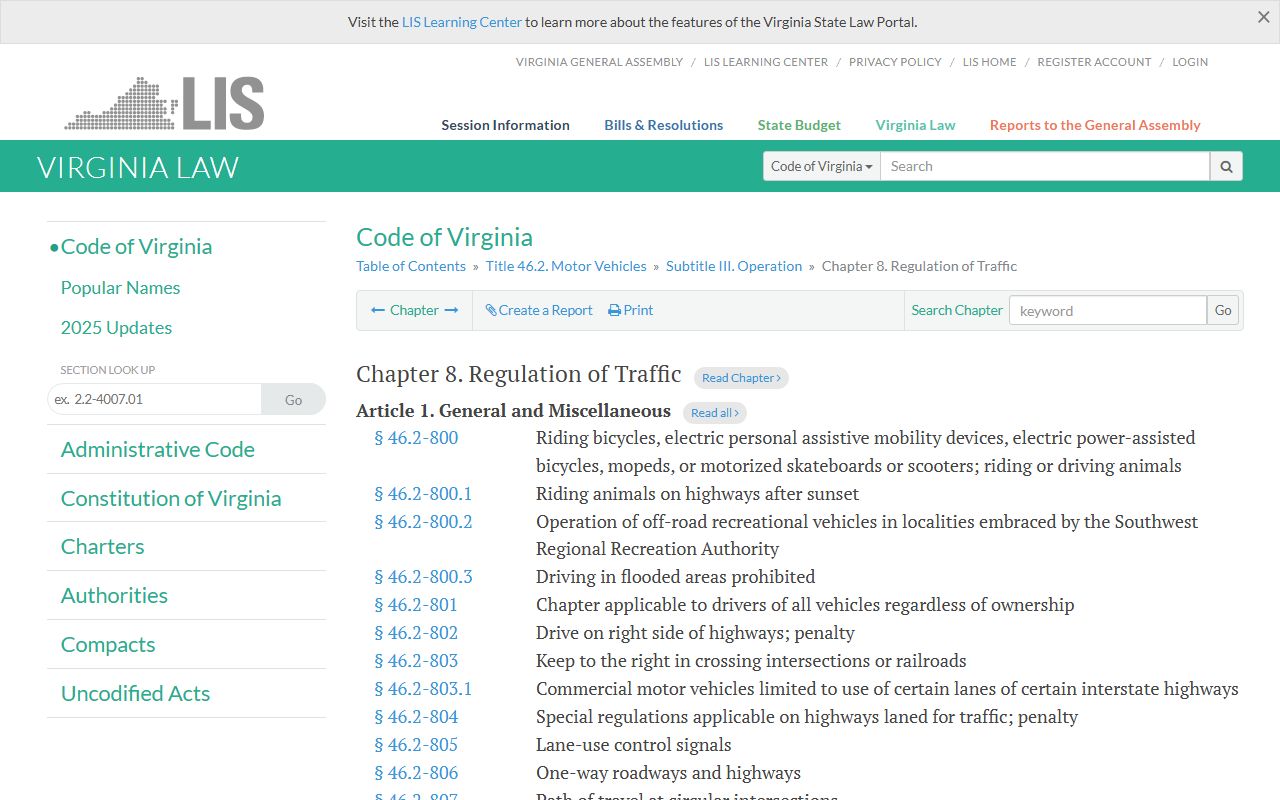
Chapter 8 of Title 46.2 at law.lis.virginia.gov covers speed limits, right-of-way rules, passing regulations, and reckless driving provisions including § 46.2-868 which makes reckless driving a Class 1 misdemeanor.
Speed-based reckless driving in Virginia is defined under § 46.2-862. Driving 20 mph or more over the posted limit, or driving over 80 mph regardless of the posted limit, qualifies as reckless. This catches a lot of drivers off guard. A ticket for going 81 mph on a 70 mph highway is a criminal charge in Virginia, not just a speeding infraction. It carries up to 12 months in jail, a fine up to $2,500, and 6 demerit points.
Virginia Demerit Point System
Virginia uses a demerit point system to track driver behavior. Each traffic conviction adds points to the driver's record. The DMV monitors point totals and takes action when they get too high. Points are not the same as fines. You pay fines to the court. Points affect your driving privileges and insurance rates through the DMV.
Different violations carry different point values. Minor infractions like failure to yield carry 3 points. Speeding up to 9 mph over the limit is also 3 points. More serious violations like speeding 10 to 19 mph over the limit carry 4 points. Reckless driving and DUI each carry 6 demerit points. Points stay on the driving record for two years from the date of conviction. The conviction itself may stay visible on the record longer. DUI convictions remain on driving records for 11 years.
Drivers who accumulate 12 or more points in 12 months or 18 or more points in 24 months must attend a driver improvement clinic. Drivers who reach 18 points in 12 months or 24 points in 24 months face license suspension. Courts can also suspend licenses directly for certain offenses. The DMV provides a list of approved clinics on its website. You can earn up to 5 safe driving points by completing a clinic voluntarily.
Note: Insurance companies may pull your driving record and use the point history to set your rates. A single reckless driving conviction can result in a significant premium increase.
DUI and Reckless Driving Records in Virginia
DUI and reckless driving are the two most serious traffic offenses in Virginia. Both are criminal charges, not just traffic infractions. Both create court records and DMV records that stay on file for years. If you need to look up a DUI or reckless driving case, you search through the court records for the county or city where the arrest or stop occurred.
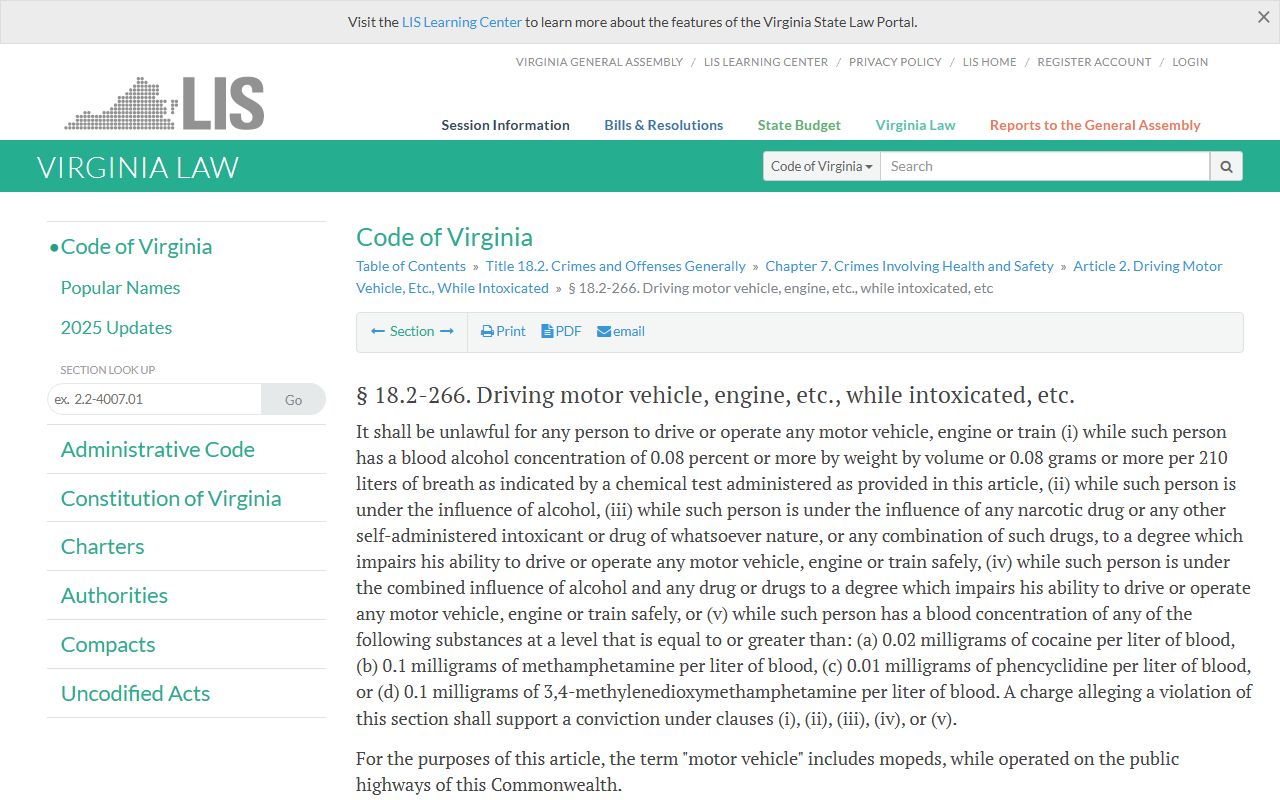
Virginia Code § 18.2-266 prohibits driving under the influence with a blood alcohol content of 0.08% or higher. The statute sets out the penalties for first, second, and third offenses and includes provisions for administrative license suspension.
Under Virginia Code § 18.2-266, DUI is a Class 1 misdemeanor for a first or second offense within 10 years. A third DUI within 10 years is a Class 6 felony. First-offense DUI carries a mandatory minimum fine, possible jail time, and a one-year license suspension. Ignition interlock devices are required for certain convictions. DUI stays on the driving record for 11 years.
Reckless driving under § 46.2-868 is also a Class 1 misdemeanor. It carries up to 12 months in jail and up to a $2,500 fine. Courts can also suspend the driver's license for up to six months. A reckless driving conviction creates both a criminal record and a traffic record. It is not the same as a traffic infraction. You cannot just pay the fine and move on without a court appearance.
Virginia State Police also enforce traffic laws on state routes and interstates. Their records are separate from county and city agencies but feed into the same statewide court and DMV systems. You can find more about their operations at vsp.virginia.gov.
Virginia State Police Traffic Enforcement
The Virginia State Police enforce traffic laws on interstate highways and state routes across the Commonwealth. They issue citations for speeding, reckless driving, DUI, and other violations. State Police troopers also investigate major crashes on state-maintained roads and produce crash reports. Those reports are public records you can request through the State Police or the local court.
The Virginia State Police handle traffic enforcement on interstates and state routes. Crash reports are available through their headquarters in Richmond. The agency also operates DMV Select locations for basic licensing and registration services.
When State Police issue a citation, the case goes to the General District Court in the county or city where the stop happened. The court processes it the same way as a local police citation. State Police records flow into the same court system and the same DMV driver record database. There is no separate search for state police citations. You look them up the same way you search any other traffic case in Virginia.
How to Find Virginia Traffic Ticket Records
You have several options for finding traffic ticket records in Virginia. Online searches work well for basic case info. In-person visits to the courthouse give you access to the full file and the ability to get certified copies.
The fastest way to start is the Virginia Judicial System website at vacourts.gov. The site has a case information portal where you can search by name or case number. Coverage varies by jurisdiction. Most courts in the state participate, but not all have full records online. The search shows basic case details including charges, hearing dates, and dispositions. It does not include images of documents in most cases.
To get copies of actual records, contact the court clerk for the county or city where the citation was issued. Court clerks are open Monday through Friday during regular business hours. You can visit in person, call to ask about mail requests, or check whether the court accepts written requests for copies. Fees for copies are set by Virginia law. Certified copies cost more than plain ones.
For your own driver record, go through the Virginia DMV. You can request a copy of your driving record online, by mail, or in person at a DMV customer service center. Your driving record shows all Virginia convictions, points assessed, license status, and any restrictions. It also shows out-of-state convictions that were reported to Virginia under the Interstate Compact. There is a fee to get a copy of your driving record from the DMV.

The Virginia official state portal at virginia.gov connects you to all state agencies including the DMV, courts, and State Police. Use it to find direct links to the services you need for traffic ticket records.
For Northern Virginia counties, local resources are especially robust. Fairfax County Police Department and Arlington County Police both maintain traffic records and coordinate with local courts. Loudoun County has detailed traffic safety information available at loudoun.gov, including speed management resources.
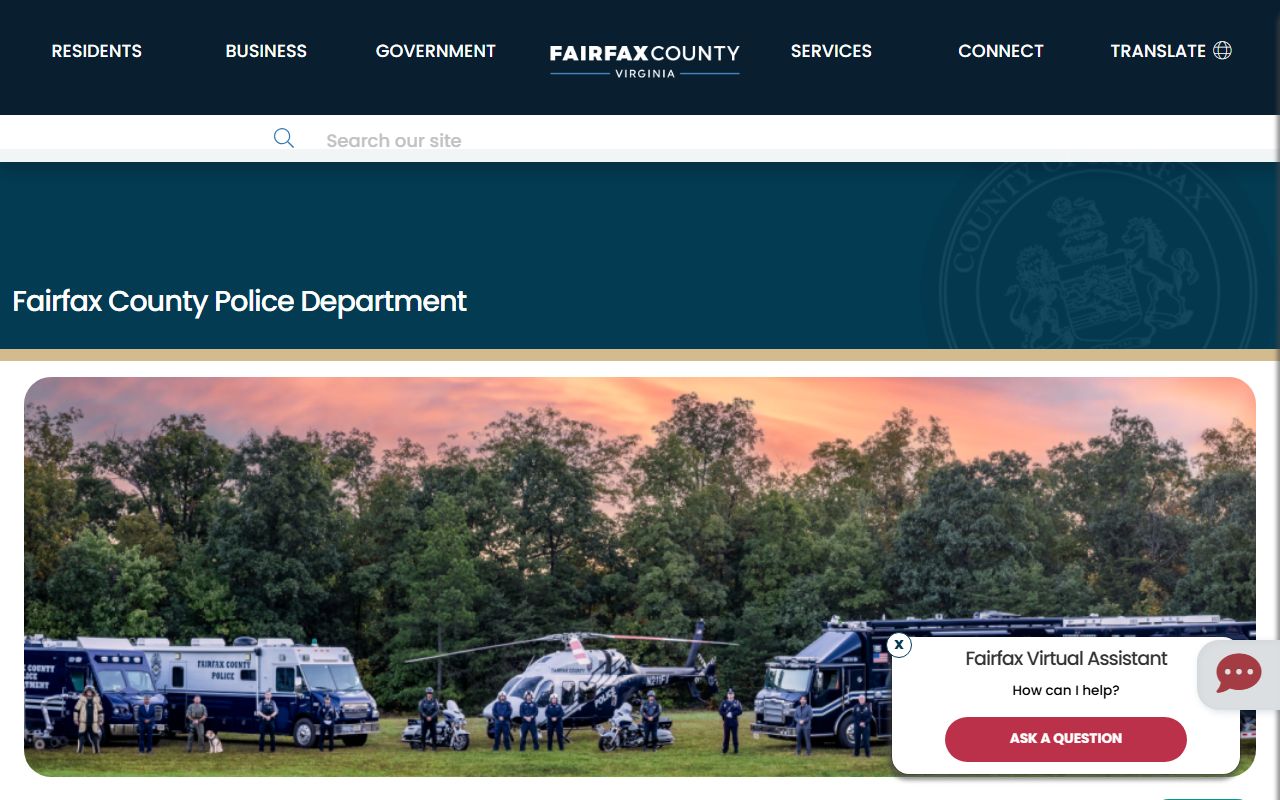
The Fairfax County Police Department, headquartered at 12099 Government Center Parkway, handles traffic enforcement across one of Virginia's largest and most populated counties.
Arlington County Government serves the urban Northern Virginia community across from Washington D.C. Arlington County Police enforce traffic laws and the local General District Court processes all citations.
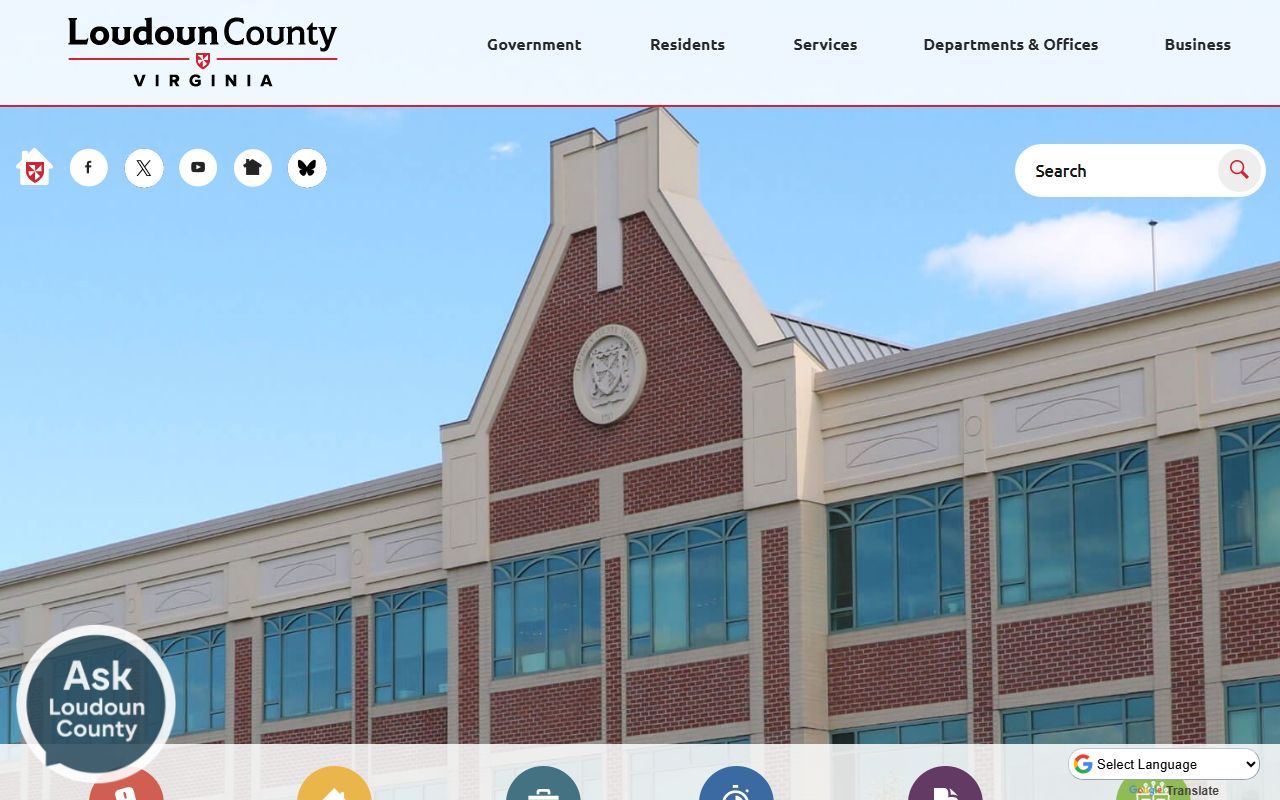
Loudoun County has implemented traffic calming measures including speed humps and active speed management programs. All citations issued in Loudoun are processed through the Loudoun County General District Court.
Browse Virginia Traffic Ticket Records by County
Every Virginia county has its own General District Court handling local traffic cases. Select a county below to find court contact info, local resources, and how to search traffic records in that area.
Traffic Ticket Records in Major Virginia Cities
Virginia's independent cities each have their own General District Court for traffic matters. Select a city below to find local court resources and traffic record information.